Million-Pound Bills Arrive
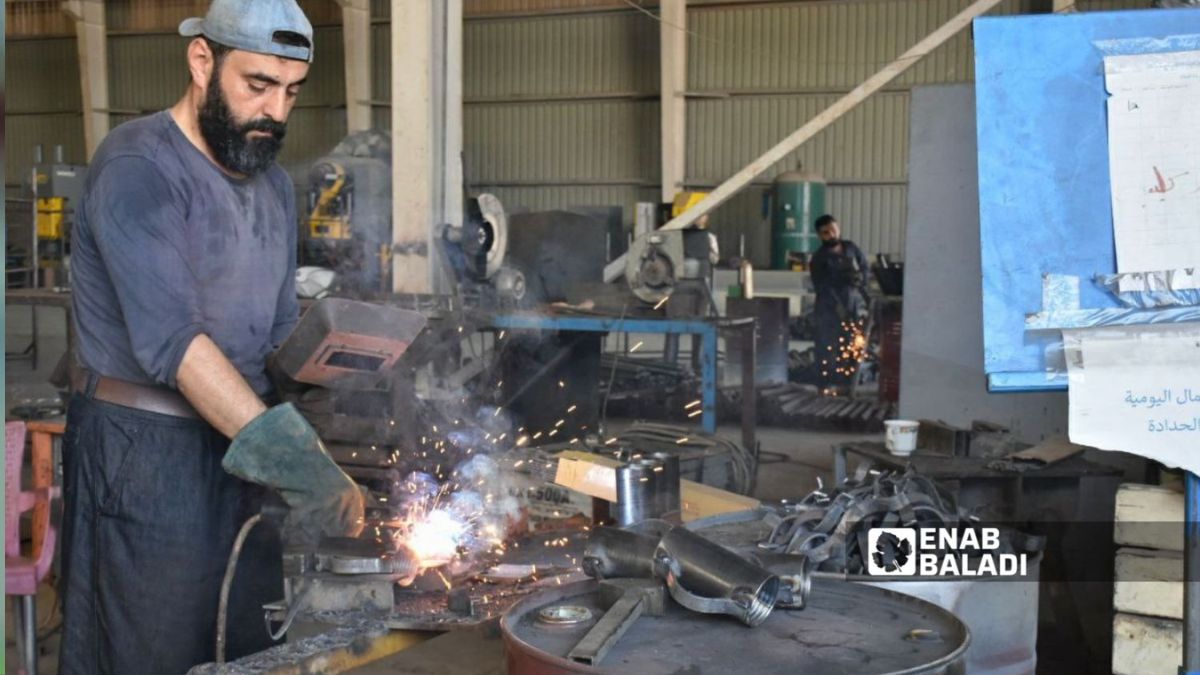
Aleppo factory operators say the latest electricity invoices are reaching millions of Syrian pounds (SYP), with the third-tier industrial rate now set at 1,700 SYP per kilowatt-hour. The head of the al-Arqub industrial committee in Aleppo, Taysir Darklat, described the new bills as “astronomical” in remarks made on 6 May 2026.
The increase falls hardest on plants exempted from rotating power cuts — the same plants that need round-the-clock supply to keep production lines running. Darklat said industrial sites still receive only about 12 hours of grid power daily, while parts of some residential areas get 20 to 22 hours.
Energy as Production Cost
According to Darklat, electricity accounts for between 20 and 60 percent of total production costs depending on the sector, with textiles, chemicals and metallurgy at the high end. Higher kilowatt prices feed directly into the cost of finished goods and erode the price advantage of Syrian-made products against imports, in both the domestic market and for export.
Darklat added that the decision was issued without consulting industrialists, whom he called partners in the economic process. He cited regional rate differences as another competitiveness gap, with Idlib at about 10 US cents and parts of northern Aleppo such as al-Rai at roughly 8 cents per kilowatt-hour.
Payment Rules Tighten
Industrialists also flagged a procedural shift. Bank payment of utility bills has been removed; settlement is now cash-only and must be made in the new currency, with no option to pay one bill while leaving another. Any delay can trigger meter disconnection and a separate reconnection procedure.
Solar Workaround Stalls
A second industrialist, Mahmoud Sheikh al-Kar, said solar power is increasingly discussed as a substitute but runs into two obstacles: a high upfront capital cost, and the regulatory framework governing on-site generation. Choosing solar, he noted, often means deferring investment in new machinery or expanded production lines.
He warned that going off-grid without a backup connection to the network exposes plants to outages if panels underperform or the inverter system fails — a risk most operators are unwilling to absorb in the absence of clearer rules.
The Underlying Tariff
The Ministry of Energy unveiled the four-tier electricity tariff on 30 October 2025. The first tier sets 600 SYP per kilowatt-hour for households consuming up to 300 kilowatt-hours over a two-month cycle, with a 60 percent state subsidy on cost. The second tier is 1,400 SYP for higher residential consumption and small businesses. The third tier is 1,700 SYP for institutions and factories that need continuous supply, and the fourth, at 1,800 SYP, covers heavy-consumption plants such as smelters.