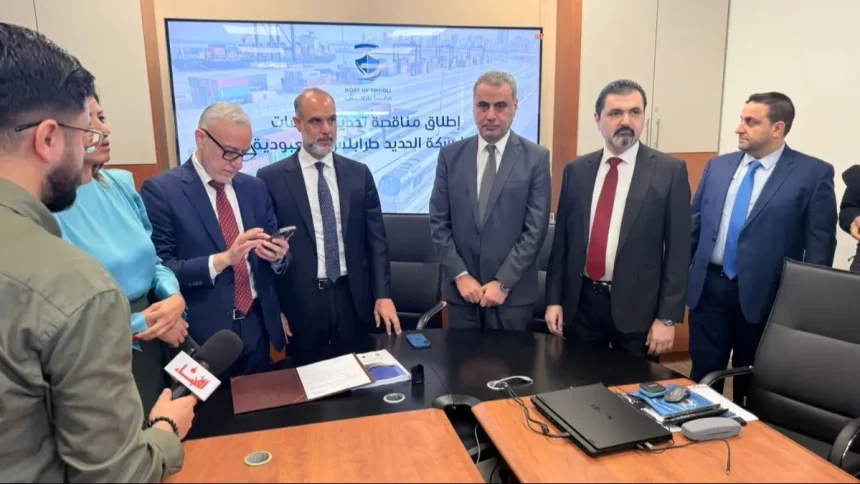
Tender for the Cross-Border Line
Lebanon's transport minister, Fayez Rasamny, has launched a tender to modernize and design a railway line linking the port of Tripoli with the Aboudieh crossing on the Lebanese-Syrian border. The announcement was delivered from the port of Tripoli itself and frames the project as Lebanon's entry point into a wider regional rail connectivity push.
Technical studies for the line are expected to be completed within six months. The minister tied any move to implementation to the results of those studies and to a positive economic and investment feasibility verdict.
Tripoli as a Regional Hub
The minister tied the rail proposal to Tripoli's existing assets, naming the port itself, the adjacent economic free zone, and the city's airport as a combination that makes a rail extension into the Syrian interior a logical next step. He cast the line as a way to lift the port's standing as a regional transport node and to inject activity into the wider Lebanese economy.
Northern Lebanon's older transport infrastructure has been targeted for revival as part of a broader government program. The rail tender sits inside that program, alongside plans to dust off other dormant projects in the area.
Plugging Into Regional Rail
Lebanon has joined regional meetings on connecting Syria, Turkey, Jordan, and Saudi Arabia by rail, and is pushing to be slotted into those plans. The minister linked the move to reconstruction and broader economic development, framing rail connectivity as an infrastructural backbone of post-conflict regional growth.
Security and Private Capital
Stability is the precondition for any investor commitment, the minister stressed, calling for a safe environment that allows long-cycle development projects to run their course. He pointed to public-private partnerships as the funding model the ministry wants to lean on, situating the Tripoli-to-border rail proposal as a candidate for that kind of mixed financing.
For the Syrian side, the line would tie the port of Tripoli and its free zone directly into the country's interior, slotting into the same regional integration framework the minister cited for Turkish, Jordanian, and Saudi connections.