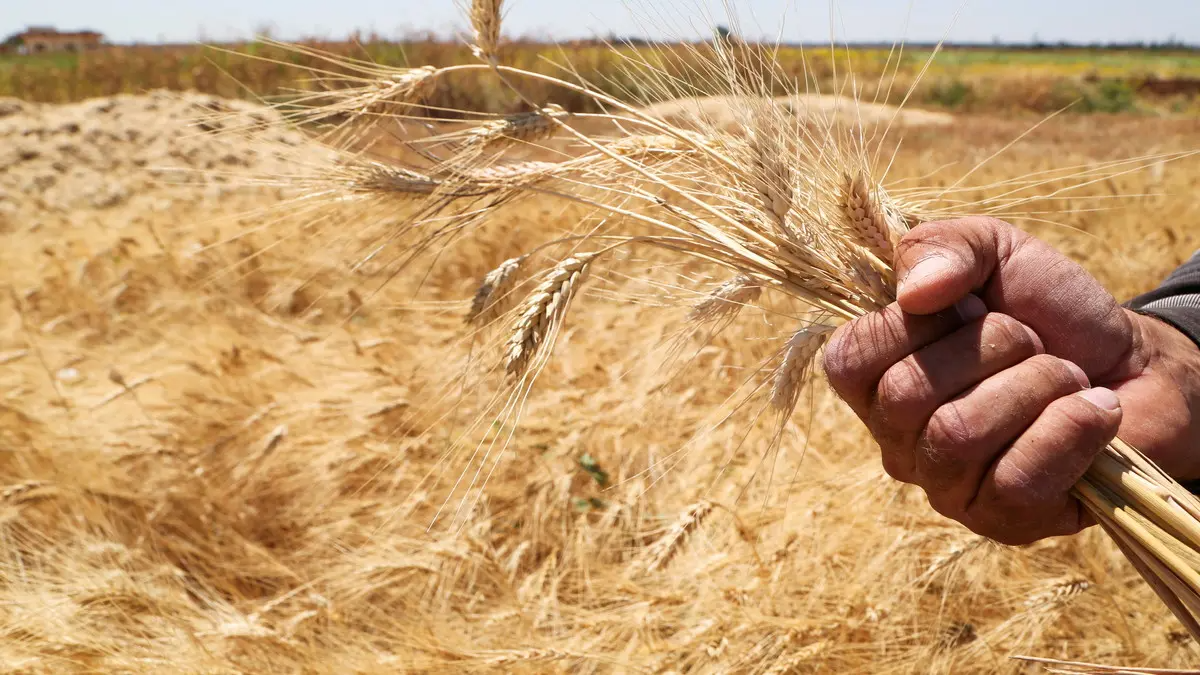
Wheat Planting Reaches 86 Percent
Syria's Ministry of Agriculture announced on 21 April 2026 that national wheat planting had reached 86 percent of the planned target for the current season, covering 1.2 million hectares out of a targeted 1.4 million hectares across all governorates. Said Ibrahim, Director of the Agricultural Planning and Statistics Directorate, said production is expected to reach approximately 2.3 million tons, provided weather conditions remain favorable through harvest.
The ministry had set a full-season target of 2.8 million tons, implying a projected shortfall of roughly 500,000 tons relative to the original plan. Irrigated cultivation reached 505,000 hectares—79 percent of the 640,000-hectare irrigated target. Rainfed planting exceeded projections, reaching 763,000 hectares and representing 92 percent of its 830,000-hectare target.
Rainfall Spurs Rainfed Agriculture
Ministry officials attributed the strong rainfed performance to above-average rainfall recorded across Syrian governorates this season, which encouraged greater farmer participation in unirrigated cultivation compared with recent seasons. The primary challenge reported during planting was localized waterlogging caused by heavy precipitation in certain growing areas.
Electronic Platform for Wheat Collection
The Syrian Grain Corporation launched an electronic platform for wheat reservations and delivery ahead of the 2026 harvest, aimed at reducing procedural delays and improving farmer access to government collection centers. Field support teams have been deployed at designated centers to assist producers through the new system.
Food Security Implications
A harvest of 2.3 million tons would mark a meaningful recovery in domestic grain output and reduce the country's reliance on imported supplies. Wheat is Syria's primary staple crop, and domestic production directly influences flour availability and bread prices—the central food cost for most Syrian households. The gap between domestic output and national consumption has historically been filled through grain imports, making the harvest figure a key variable for foreign exchange planning and food security policy.