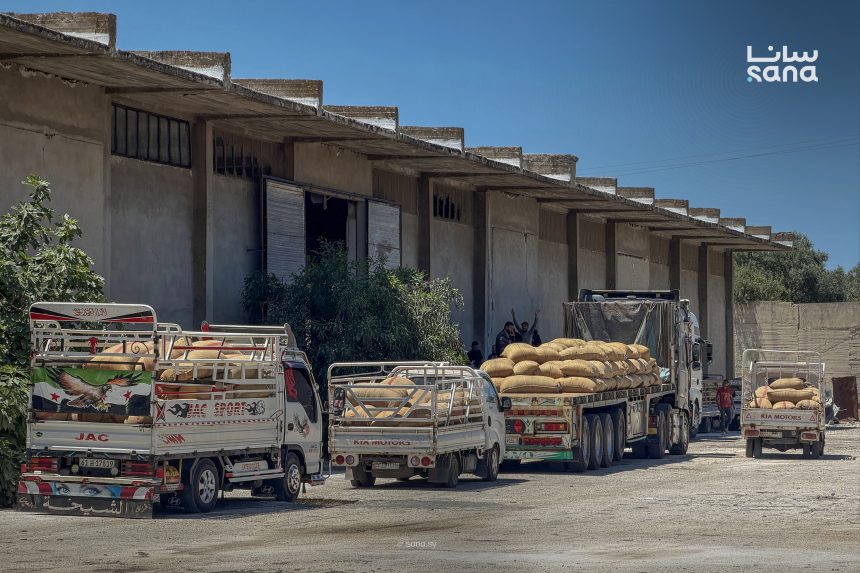
Harvest Reception Begins
The Al-Enabiyah reception center in Tartus began accepting wheat from farmers on 1 June 2026, opening the province's procurement season. The Tartus branch of the Syrian Grain Corporation said it had introduced simplified government procedures to speed the marketing and collection of the crop and to ease the delivery process for growers bringing their harvest to official channels.
An Electronic Queue
For the first time this season, farmers reserve their delivery slots through an electronic queue and receive text-message notifications specifying their arrival times, rather than presenting their loads without an appointment.
On site, the process moves in sequence: trucks are weighed, samples are drawn and analyzed, the grain is graded for quality, and the crop is then transferred into the center's warehouses for storage.
Pricing by Grade
Final payment to farmers is determined by the sample analysis according to official grade standards, the branch director, engineer Mahmoud Shibly, said. Ahead of the season, the center's warehouses and silos were repaired and rehabilitated and its reception equipment upgraded to handle the incoming volume.
Farmers Seek Fuel Support
A farmer and transporter, Ibrahim Abdou Jaqjouq, described the season's output as good and the purchase prices as acceptable as he delivered his crop. He nonetheless urged authorities to provide fuel subsidies to offset rising production costs.
The appeal underscored the cost pressures facing growers this year, with fuel a central input in both cultivation and transport to collection centers. For many farmers, the price they ultimately receive after grading, weighed against those costs, will determine whether the season proves profitable.