Call for Sector Reform
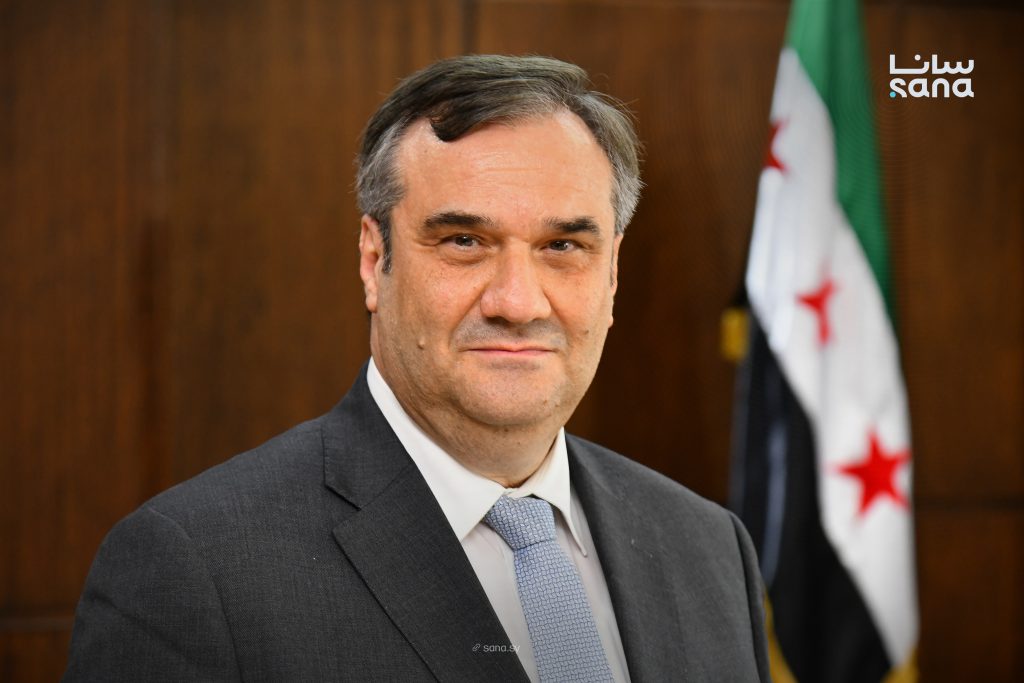
Central Bank Governor Abdul Qader Al-Hasriya said on Wednesday that developing Syria's money-changing sector is no longer optional but a necessity to strengthen confidence in the financial system and support economic stability. In a Facebook post, he framed the exchange business as one of the main pillars supporting trade, financial transfers, and monetary stability in the country.
He tied the message to the Central Bank of Syria's broader strategy to steady the Syrian pound (SYP) and steer foreign-currency dealings back toward formal channels after years of turbulence.
Accumulated Market Problems
Al-Hasriya catalogued the challenges weighing on the exchange market: exchange-rate volatility, the expansion of informal-market activity, weak institutional coordination among licensed exchange firms, and the absence of a unified professional framework. He said those gaps have fragmented day-to-day practice, eroded coordination with the central bank, and limited the spread of compliance standards.
The result, in his telling, is an uneven market in which unlicensed operators compete alongside registered firms, and where the central bank's ability to rein in unregulated activity has been constrained.
Legal Legacy and the 2006 Law
The governor reviewed the profession's legal history. He described Law No. 24 of 2006 as a qualitative shift that organized money-changing for the first time since 1955, replacing a 1986 law that had criminalized the activity and allowed sentences of up to 25 years in prison.
The 2006 statute, he said, was meant to move the sector from criminalization to regulation and from informal practice to institutional oversight. But in his telling, entrenched corruption in institutions of the former government prevented the law from being applied professionally and blocked its intended reset.
Pushing Business Into Formal Channels
Al-Hasriya argued that rising pressures on the exchange market require stricter regulation of the profession and a more stable environment for licensed operators, aligned with the central bank's strategy to build a balanced and transparent foreign-exchange market.
He recalled that in August the Central Bank called on citizens to limit money-changing and outbound remittance transactions to licensed firms formally registered in the official exchange-company registry, and signalled that this remains the bank's public line on how Syrians should route foreign-currency dealings.