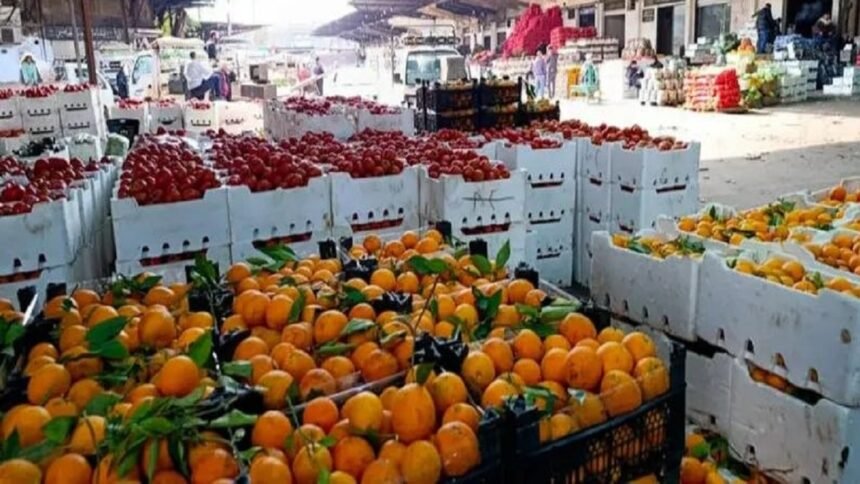
Vegetables Ease in the Capital
Wholesale and retail vegetable prices in Damascus fell by 10 to 15 percent in early June 2026 compared with previous months, easing pressure on household food budgets. A member of the capital's produce market management committee, Muhammad al-Aqqad, said supplies of several staples had improved.
Sample retail prices put potatoes at 3,500 to 5,000 Syrian pounds (SYP) per kilogram, cucumbers at 3,500 to 4,500, zucchini at 2,500 to 3,000, garlic at 4,000 to 6,000, and quality tomatoes at 4,500 to 6,000. Tomato volumes remained limited but were expected to rise within about two weeks.
Fruit Beyond Reach
Summer fruit told the opposite story. As of 31 May 2026, cherries traded at 40,000 to 60,000 SYP per kilogram, peaches and nectarines at 30,000 to 50,000, and apricots at 20,000 to 40,000 — levels that pushed many residents to buy fruit by the piece rather than by the kilogram. Bananas sold at roughly 12,000 to 15,000 and berries between 15,000 and 35,000.
Vendors described buyer interest as timid, with shoppers asking prices then leaving without purchasing. For many families, a single kilogram of fruit now equals a meaningful share of daily spending.
Exports Pull at Supply
Between 50 and 70 refrigerated trucks were leaving daily carrying vegetables and fruit to foreign markets, chiefly in the Gulf. The outbound flow earns hard currency but tightens domestic availability of the most sought-after produce.
What Is Driving Prices
Analysts and officials pointed to several pressures behind elevated fruit costs: a weaker pound, rising fuel, fertilizer and pesticide bills, reduced local output, and the priority given to exports. "The price of one kilogram equals a significant portion of daily family expenses," one resident said.
Some also cited early-season pricing and weather disruption as additional factors, suggesting certain categories could ease as the harvest broadens.