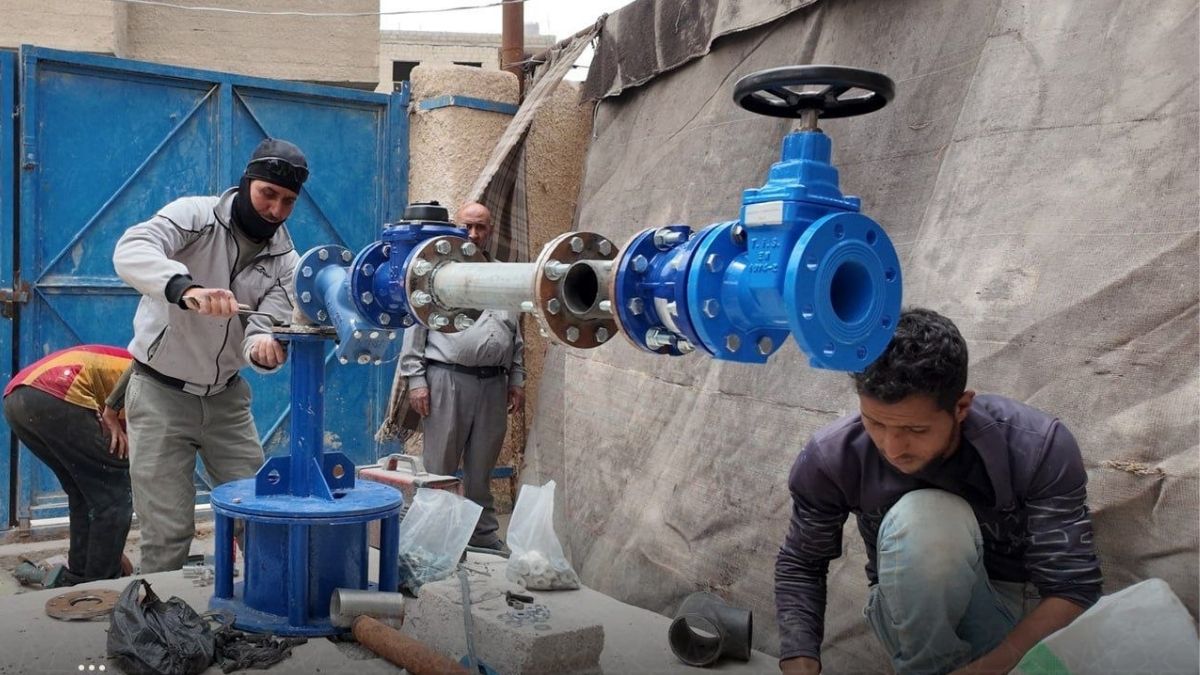
Tripled Water Supply in Damascus Suburbs
A rehabilitated pumping station in Sahnaya, in the Damascus countryside, has roughly tripled its daily water output, raising production from about 5,000 to 15,000 cubic meters per day. The upgrade was announced on 1 June 2026, restoring piped supply to communities south of the capital.
The station, known as the Eighth Node, draws on a cluster of wells that had fallen into disrepair. It now delivers roughly 30 liters per person each day across the areas it serves.
Half a Million Residents Served
About 500,000 people benefit from the project, spread across Sahnaya, Ashrafiyat Sahnaya, the 8 March Suburb, and Al-Kiswa. These districts had endured reduced and irregular supply while the wells operated below capacity.
The added output is intended to stabilize household access and ease reliance on trucked water, a costly fallback for families during shortages.
What the Works Involved
Engineers installed two new pump chambers with a combined capacity of 600 cubic meters per hour. Eight wells were fully rehabilitated and seven others partially restored, with an average capacity of about 450 cubic meters per hour.
The total cost of the rehabilitation reached approximately US$500,000 (USD).
Funding and Partners
The work was financed through the King Salman Humanitarian Aid and Relief Center and carried out in cooperation with the Syrian Civil Defense. The arrangement channels external relief funding into basic-services infrastructure rather than direct cash support.
Water access has been among the most pressing daily concerns around Damascus, where aging networks and damaged wells have left supply uneven.
A Test for Basic Services
The Sahnaya upgrade reflects a wider effort to return essential utilities to working order in populated areas near the capital. Repairing existing wells, rather than building new sources, offers a faster route to measurable gains.
Whether the higher output holds through the summer, when demand peaks, will determine how much relief residents actually feel in the months ahead.