Five of Eight Silos Out of Service
Five of the eight primary grain silos in Syria's Hasaka governorate are currently non-operational, alongside 19 of the 34 smaller storage units that complement them. The Syrian Grain Corporation has placed three of the offline primary silos into active maintenance and is racing to bring as much capacity back online as possible before the wheat harvest begins.
Hassan al-Othman, the corporation's general director, said restoring storage capacity in the northeast is the priority because the region accounts for the majority of Syria's wheat crop.
Sabah al-Khair, 120,000 Tons in Repairs
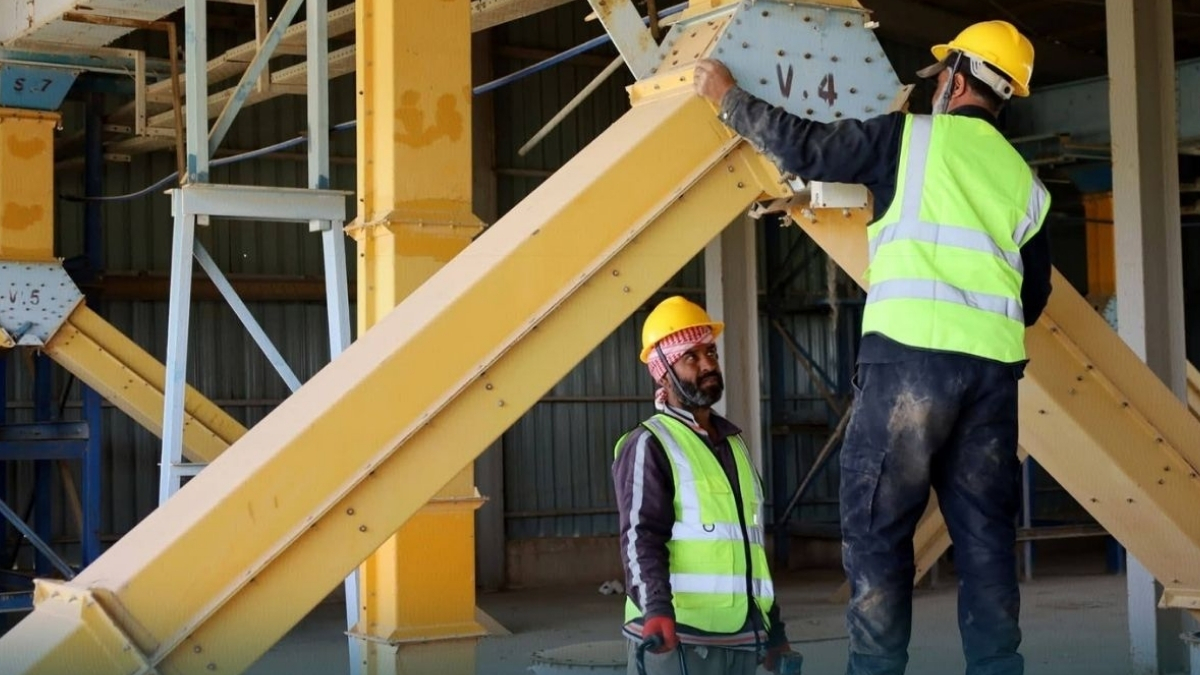
The Sabah al-Khair silo, with a designed capacity of about 120,000 tons, is among the facilities under repair. Site manager Ali Khatlan said the works span structural repairs, electrical refit, and replacement of obsolete control equipment.
Project supervisor Ahmad al-Sultan said crews are working in parallel on multiple silos rather than sequentially to compress the timeline ahead of harvest.
New Controls and Backup Storage
Omar Hamid, executive director of the corporation's electrical repairs division, said the rebuilt facilities are being fitted with programmable logic controllers, replacing the older manual control systems.
To absorb grain volumes that the silos themselves cannot yet receive, the corporation is also deploying alternative storage — open-air pads and underground warehouses — and extending the procurement window so deliveries can be staggered.
Coordination Across Divided Zones
Maher Khalil al-Hassan, deputy minister of economy and industry, said coordination across the formerly divided control zones in the northeast is being treated as essential to channel the harvest through whichever silos and crossings remain functional.
Stakes for the Crop
If sufficient capacity does not come back online in time, farmers will face delays at delivery points and a higher risk of post-harvest losses, which would in turn force a larger share of consumption demand onto imported wheat, paid for in hard currency.